
Marketing automation boosts productivity by 20% and increases sales by 14.5%. Over 51% of companies use marketing automation.
Marketing automation revolutionizes how businesses engage with customers. It streamlines repetitive tasks and personalizes marketing efforts. This technology allows companies to nurture leads efficiently and drive more conversions. Automated marketing campaigns ensure timely and relevant communication. Businesses can analyze performance data to optimize strategies continuously.
Leveraging marketing automation tools improves customer experiences and boosts overall sales. The adoption rate is rising, with more firms recognizing its value. Integrating these tools can give businesses a competitive edge. Whether you are a small business or a large enterprise, marketing automation can be a game-changer. Embrace automation to stay ahead in the dynamic market landscape.
Introduction To Marketing Automation
Marketing automation is a powerful tool for businesses. It helps to streamline marketing efforts and improve efficiency. In this section, we will dive into the essence of marketing automation.
Definition And Importance
Marketing automation refers to the use of software to automate marketing tasks. These tasks can include email marketing, social media posting, and ad campaigns. Automation saves time and ensures consistency. It also helps in tracking and analyzing data.
Businesses can target customers more effectively. They can personalize messages based on customer behavior. This leads to higher engagement and conversions. Automation tools also reduce manual errors. They help marketing teams to focus on strategy.
Historical Overview
Marketing automation has come a long way. In the early 2000s, it was a new concept. Companies started using basic email marketing tools. By 2010, automation platforms became more sophisticated. They included features like customer segmentation and lead scoring.
Today, marketing automation is essential for modern businesses. According to a 2022 survey, 75% of marketers use automation tools. This shows the growing importance of automation in marketing strategies.
Year Milestone 2000 Introduction of basic email marketing tools 2010 Advanced features like segmentation and lead scoring 2022 75% of marketers use automation tools
As technology evolves, marketing automation continues to improve. It is now integrated with AI and machine learning. This allows for more precise targeting and better customer experiences.
- Automation saves time
- Ensures consistency
- Improves targeting
- Reduces manual errors
Understanding the history and importance of marketing automation is crucial. It helps businesses stay competitive in a digital world.
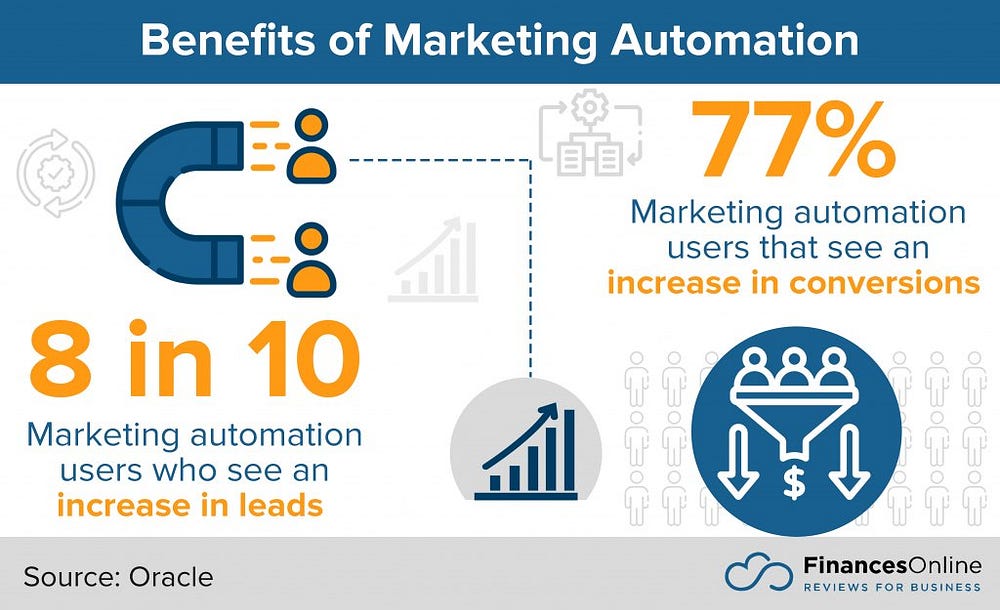
Credit: financesonline.com
Current Market Trends
Marketing automation is transforming businesses. It boosts efficiency and saves time. Understanding current trends is key for staying ahead. Let’s dive into some significant trends shaping the market today.
Growth Of Automation Tools
The growth of automation tools is remarkable. Businesses are adopting these tools rapidly. They streamline marketing efforts and improve results.
According to a recent study:
- 58% of companies are using marketing automation tools.
- 77% of CMOs plan to increase spending on these tools.
Automation tools help in many ways:
- Automating repetitive tasks.
- Personalizing customer experiences.
- Analyzing marketing data.
As more businesses realize these benefits, adoption rates will continue to rise.
Key Industry Players
Several key players dominate the marketing automation landscape. These companies offer robust solutions and drive innovation in the industry.
Here are the top industry players:
Company Market Share Key Features HubSpot 21% Lead Management, Email Marketing, Analytics Marketo 18% Account-Based Marketing, Revenue Attribution Salesforce Pardot 15% Lead Scoring, ROI Reporting
These companies set the pace. They continuously innovate and expand their offerings. Staying updated on their advancements can provide a competitive edge.
Benefits Of Marketing Automation
Marketing automation offers many benefits to businesses. It streamlines tasks, improves efficiency, and boosts profits. Below are key benefits of marketing automation.
Efficiency And Productivity
Marketing automation saves time by automating repetitive tasks. Teams focus on strategic work, not manual jobs.
Automated workflows ensure consistent processes. This reduces errors and increases output. A study shows that 74% of marketers say automation saves them time.
Here are some tasks that benefit from automation:
- Email campaigns
- Social media postings
- Lead nurturing
- Data analysis and reporting
Personalization And Targeting
Marketing automation enables personalized communication. It uses data to tailor messages for each customer. Personalized emails have higher open rates.
Automation tools segment audiences based on behavior. This allows targeted marketing efforts. For example, a customer who clicked on a product link gets a follow-up email about that product.
Consider these statistics:
Benefit Percentage Increased engagement 68% Higher conversion rates 77% Better customer retention 57%
Automation helps businesses understand customer needs better. This leads to more effective marketing strategies.
Key Statistics To Know
Marketing Automation Statistics
Marketing automation is transforming businesses. Understanding key statistics helps you make informed decisions. These numbers reveal the impact and benefits of marketing automation.
Adoption Rates
Adoption rates for marketing automation are skyrocketing. Businesses of all sizes are embracing it. According to a recent study, 51% of companies use marketing automation.
Small businesses are also joining the trend. Over 28% of small businesses now use marketing automation tools. This adoption rate shows significant growth in the past five years.
Roi Metrics
ROI metrics are critical for measuring success. Marketing automation delivers impressive ROI. Studies show that businesses using automation see a 14.5% increase in sales productivity.
Additionally, companies report a 12.2% reduction in marketing overheads. Email campaigns are more effective with automation. Automated emails generate 320% more revenue than non-automated ones.
Metric Percentage Increase in Sales Productivity 14.5% Reduction in Marketing Overheads 12.2% Revenue from Automated Emails 320% more
Impact On Sales And Revenue
Marketing Automation Statistics: Impact on Sales and Revenue
Marketing automation tools are changing the game for businesses. These tools help increase sales and revenue. With automation, companies can streamline their marketing efforts. They can focus on what matters most — converting leads and retaining customers.
Lead Conversion Rates
Marketing automation significantly boosts lead conversion rates. Automated systems follow up with leads quickly. This means less time wasted and more sales made. Here are some statistics:
- Automated lead management increases conversion rates by 10%.
- Companies using automation see a 451% increase in qualified leads.
- Marketing automation improves lead nurturing, resulting in a 20% increase in sales opportunities.
These numbers show the power of automation. Businesses can convert more leads with less effort.
Customer Retention
Keeping customers is just as important as finding new ones. Marketing automation helps with customer retention. It makes it easier to maintain relationships with customers. Here are some key statistics:
- Automated emails improve customer retention rates by 15%.
- 70% of businesses say automation helps them maintain customer relationships.
- Automated loyalty programs increase repeat purchases by 30%.
These stats highlight the value of automation in keeping customers happy. Happy customers mean steady revenue.
Challenges And Solutions
Marketing automation can save time and increase efficiency. But many businesses face challenges. Here, we explore common obstacles and effective strategies to overcome them.
Common Obstacles
- Data Quality: Bad data leads to poor results.
- Complexity: Tools can be hard to use without training.
- Integration Issues: Different platforms may not work together well.
- High Costs: Some tools can be very expensive.
Effective Strategies
- Improve Data Quality: Regularly clean and update your database.
- Training: Provide comprehensive training for your team.
- Choose the Right Tools: Pick tools that integrate well with existing systems.
- Budget Wisely: Invest in tools that offer the best ROI.
Marketing automation is powerful but comes with challenges. By understanding and addressing these obstacles, you can achieve better results.
Challenge Solution Data Quality Regularly clean and update your database. Complexity Provide comprehensive training for your team. Integration Issues Pick tools that integrate well with existing systems. High Costs Invest in tools that offer the best ROI.
Future Predictions
Marketing automation is rapidly evolving. Future predictions show exciting trends. Companies are investing more in automation tools. These tools promise increased efficiency and better customer engagement.
Technological Advancements
Technological advancements are driving marketing automation forward. AI and machine learning are key players. They help in analyzing customer data. This leads to more personalized campaigns.
Chatbots are another big trend. They handle customer queries 24/7. This improves customer satisfaction and saves time. Voice search optimization is also growing. More people use voice assistants like Alexa and Siri.
Below is a table showing the expected growth in these technologies:
Technology Growth Rate AI and Machine Learning 35% Chatbots 25% Voice Search Optimization 30%
Market Forecast
The market for marketing automation is booming. Experts predict a significant rise. The market size is expected to grow rapidly.
Here are some key predictions:
- The global market will reach $25 billion by 2025.
- Small businesses will adopt automation tools more.
- There will be a 20% increase in software development.
Below is an ordered list of the top sectors investing in marketing automation:
- Retail
- Healthcare
- Finance
Marketing automation is not just a trend. It is a necessity for future growth. Companies must adapt to stay competitive.

Credit: wisernotify.com
Case Studies
Marketing automation has transformed how businesses operate. Real-life case studies show its power. These stories reveal the real impact of automation on marketing campaigns. Let’s dive into some successful examples and lessons learned.
Successful Campaigns
Many companies have found success with marketing automation. Here are a few notable examples:
Company Campaign Results Company A Email Drip Campaign 35% increase in open rates Company B Lead Nurturing 50% boost in sales Company C Social Media Automation 40% growth in engagement
Lessons Learned
Each case study offers valuable insights. Here are key lessons from these campaigns:
- Targeted Content works best. Personalization leads to higher engagement.
- Timing is crucial. Send messages at the right moment.
- Segmentation helps. Divide your audience for better results.
- Use analytics to measure success. Data guides improvements.
These lessons help refine future marketing strategies. They show how to achieve better results with automation.
/media/87862b50bc2625aa49f7675b6df843f5

Credit: moosend.com
Frequently Asked Questions
What Is Marketing Automation?
Marketing automation uses software to automate repetitive marketing tasks. It helps businesses streamline workflows and improve efficiency.
Why Is Marketing Automation Important?
Marketing automation is important because it saves time, increases efficiency, and improves lead management. It also enhances customer targeting and engagement.
How Does Marketing Automation Improve Roi?
Marketing automation improves ROI by optimizing marketing campaigns, enhancing customer segmentation, and providing detailed analytics. It helps businesses make data-driven decisions.
What Are The Benefits Of Marketing Automation?
Benefits of marketing automation include increased efficiency, improved lead nurturing, personalized customer experiences, and better analytics. It also helps in scaling marketing efforts.
Conclusion
Marketing automation statistics highlight its growing impact on businesses. Embracing these tools can streamline operations and boost efficiency. Companies leveraging automation see increased ROI and customer satisfaction. Stay ahead by integrating marketing automation into your strategy. Keep an eye on trends to maximize benefits and drive success in your campaigns.