Email marketing is a powerful tool for businesses and individuals alike, allowing you to reach a large audience with just a few clicks. Gmail, one of the most popular email platforms, can be a useful tool for sending mass emails. However, it’s essential to do this correctly to avoid your emails being marked as spam and to ensure compliance with email marketing best practices. This guide will walk you through how to send mass email in Gmail effectively.
Understanding Mass Emailing in Gmail
Gmail is designed primarily for personal use, so it has some limitations when it comes to sending bulk emails. Gmail’s sending limits are 500 emails per day for regular accounts and 2,000 emails per day for Google Workspace (formerly G Suite) accounts. Exceeding these limits can result in your account being temporarily suspended.
Why Use Gmail for Mass Emails?
Ease of Use: Gmail’s user-friendly interface makes it easy for anyone to send emails.
Integration: Gmail integrates well with various Google services and third-party tools.
Cost-Effective: Using Gmail is cost-effective, especially for small-scale email campaigns.
Preparing to Send Mass Emails
1. Build Your Email List
Ensure you have a list of recipients who have opted in to receive your emails. Avoid using purchased lists, as they often result in high bounce rates and spam complaints.
How to Build an Email List
Opt-In Forms: Use sign-up forms on your website or blog.
Lead Magnets: Offer valuable content like eBooks or discounts in exchange for email addresses.
Social Media: Promote your email list on your social media channels.
2. Segment Your Email List
Segmenting your list can improve engagement and reduce the likelihood of your emails being marked as spam.
Create a Label: Click on “Labels” and then “Create label” to name your group.
Add Contacts: Select contacts and click on the “Manage labels” icon to add them to the new label.
2. Compose Your Email
Compose a well-crafted email that is personalized and relevant to your recipients.
Email Composition Tips
Subject Line: Create a clear and compelling subject line.
Personalization: Use the recipient’s name and tailor the content to their interests.
Call to Action (CTA): Include a clear CTA to guide recipients on the next steps.
3. Use Mail Merge with Google Sheets
To personalize each email, you can use mail merge with Google Sheets and a Google add-on like Yet Another Mail Merge (YAMM).
Steps to Use Mail Merge
Install YAMM: Go to the G Suite Marketplace and install Yet Another Mail Merge.
Prepare Your Google Sheet: Create a Google Sheet with columns for email addresses and any personalization fields (e.g., First Name, Last Name).
Compose Your Email Template: Write your email in Gmail and use placeholders for personalization (e.g., {{First Name}}).
Run the Mail Merge: Open YAMM in your Google Sheet, select your email template, and start the mail merge.
4. Send Your Email
Once you’ve set up your mail merge, send your email. YAMM allows you to send up to 50 emails per day for free, with higher limits available on paid plans.
Best Practices for Mass Emailing in Gmail
1. Comply with Anti-Spam Laws
Ensure your emails comply with laws like the CAN-SPAM Act and GDPR.
Compliance Tips
Unsubscribe Link: Include an easy-to-find unsubscribe link in every email.
Physical Address: Include your business’s physical address.
Clear Identification: Clearly identify who you are and why you are emailing.
2. Monitor Your Email Metrics
Track key metrics to measure the success of your email campaign and make necessary adjustments.
Important Metrics
Open Rates: The percentage of recipients who open your email.
Click-Through Rates (CTR): The percentage of recipients who click on links within your email.
Bounce Rates: The percentage of emails that are not delivered.
3. Avoid Spam Triggers
Avoid words and practices that can cause your emails to be marked as spam.
Spam Avoidance Tips
Avoid Spammy Words: Steer clear of words like “Free,” “Buy Now,” and “Limited Time.”
Use Clean HTML: Ensure your email code is clean and well-structured.
Keep a Balance of Text and Images: Avoid having too many images or too little text.
FAQ Section
1. What are Gmail’s sending limits for mass emails?
Gmail allows up to 500 emails per day for regular accounts and 2,000 emails per day for Google Workspace accounts. Exceeding these limits can result in temporary suspension of your account.
2. How can I personalize mass emails in Gmail?
Use mail merge with Google Sheets and an add-on like Yet Another Mail Merge (YAMM) to personalize each email with recipient-specific details.
3. What should I include in my email to comply with anti-spam laws?
Include an easy-to-find unsubscribe link, your business’s physical address, and clear identification of who you are and why you are emailing.
4. How can I avoid my mass emails being marked as spam?
Avoid using spammy words, ensure your HTML code is clean, maintain a balance of text and images, and comply with anti-spam laws.
5. How do I monitor the success of my mass email campaign?
Track metrics such as open rates, click-through rates, and bounce rates to measure the success of your email campaign and make necessary adjustments.
6. Can I send mass emails for free using Gmail?
Yes, you can use Gmail to send mass emails for free, but you need to stay within Gmail’s daily sending limits. Using tools like Yet Another Mail Merge can help manage and personalize your emails effectively.
7. What should I do if my Gmail account is temporarily suspended for sending too many emails?
If your Gmail account is temporarily suspended, wait 24 hours for it to be reactivated. Reduce the number of emails you send daily to stay within Gmail’s limits.
Conclusion
Sending mass emails in Gmail can be an effective way to reach your audience, provided you follow best practices and stay within Gmail’s limits. By building a quality email list, personalizing your emails, complying with anti-spam laws, and using tools like Yet Another Mail Merge, you can ensure your emails are well-received and achieve your marketing goals. Always focus on providing value to your subscribers and maintaining their trust to build a successful email marketing strategy.
In the competitive world of digital marketing, lead magnets are essential tools for attracting potential customers and converting them into loyal clients. A lead magnet is a valuable resource offered in exchange for a prospect’s contact information, typically an email address. The right lead magnet can significantly boost your email list, enhance engagement, and drive conversions. In this article, we’ll explore a variety of lead magnet ideas that you can implement to grow your business.
What Makes a Good Lead Magnet?
Before diving into specific ideas, it’s important to understand the characteristics of an effective lead magnet:
Value: It should offer something valuable to your target audience.
Relevance: It must be relevant to your audience’s needs and interests.
Specificity: A focused and specific lead magnet tends to perform better than a broad one.
Immediate Gratification: Deliver something that can provide instant value.
Problem-Solving: Address a specific problem or pain point that your audience is experiencing.
Lead Magnet Ideas
1. eBooks
Overview: eBooks are comprehensive resources that delve deeply into a specific topic relevant to your audience.
Benefits:
Establishes your authority and expertise.
Provides substantial value, encouraging prospects to exchange their contact information.
Tips for Creating eBooks:
Focus on a topic that addresses a significant pain point.
Include actionable insights and tips.
Use engaging visuals and a professional layout.
2. Checklists
Overview: Checklists are simple yet powerful tools that guide your audience through a process or task.
Benefits:
Easy to create and consume.
Provides immediate, actionable value.
Tips for Creating Checklists:
Identify a specific process or task your audience struggles with.
Break down the process into clear, actionable steps.
Design it to be visually appealing and easy to follow.
3. Templates
Overview: Templates are pre-designed resources that save your audience time and effort in creating their own documents.
Benefits:
Highly practical and time-saving.
Can be adapted for various industries and uses.
Tips for Creating Templates:
Determine what types of documents or tools your audience needs.
Ensure the template is easy to customize.
Provide clear instructions or examples on how to use it.
4. Webinars
Overview: Webinars are live or recorded online presentations that provide valuable information on a specific topic.
Benefits:
Allows for direct interaction with your audience.
Establishes your expertise and fosters trust.
Tips for Hosting Webinars:
Choose a topic that resonates with your audience’s interests and challenges.
Promote the webinar through multiple channels.
Engage with attendees through Q&A sessions and interactive elements.
5. Free Trials
Overview: Offering a free trial of your product or service can attract potential customers by allowing them to experience its value firsthand.
Benefits:
Provides a risk-free way for prospects to try your product.
Can lead to higher conversion rates as users experience the benefits directly.
Tips for Offering Free Trials:
Clearly communicate the trial’s duration and any limitations.
Provide excellent onboarding and support to help users get the most out of the trial.
Follow up with trial users to gather feedback and encourage conversion.
6. Case Studies
Overview: Case studies showcase real-life examples of how your product or service has helped customers achieve their goals.
Benefits:
Builds credibility and trust.
Provides concrete evidence of your product’s effectiveness.
Tips for Creating Case Studies:
Select compelling and relatable success stories.
Include data and metrics to highlight the results.
Present the information in a well-structured, engaging format.
7. Whitepapers
Overview: Whitepapers are in-depth reports that provide detailed information on a specific topic, often supported by research and data.
Benefits:
Positions you as a thought leader.
Appeals to a more educated and professional audience.
Tips for Creating Whitepapers:
Conduct thorough research on the chosen topic.
Present data and insights clearly and concisely.
Include visuals like charts and graphs to support your points.
8. Quizzes and Surveys
Overview: Interactive quizzes and surveys engage your audience while gathering valuable data and insights.
Benefits:
Highly engaging and shareable.
Provides personalized results or insights.
Tips for Creating Quizzes and Surveys:
Focus on topics that interest your audience.
Keep the questions relevant and concise.
Offer personalized results or feedback based on responses.
9. Resource Libraries
Overview: A collection of valuable resources, such as guides, templates, checklists, and more, all in one place.
Benefits:
Provides immense value by offering multiple resources.
Encourages prolonged engagement with your content.
Tips for Creating Resource Libraries:
Curate high-quality resources relevant to your audience.
Make the library easy to navigate and access.
Continuously update the library with new content.
10. Discount Codes and Coupons
Overview: Offering discount codes or coupons is an effective way to attract prospects who are interested in your products or services.
Benefits:
Provides immediate monetary value.
Can drive quick conversions.
Tips for Offering Discounts and Coupons:
Clearly communicate the terms and conditions.
Create a sense of urgency with limited-time offers.
Track the performance to measure effectiveness.
FAQ Section
1. What is a lead magnet?
A lead magnet is a valuable resource offered to potential customers in exchange for their contact information, typically an email address. It’s designed to attract and convert leads.
2. Why are lead magnets important?
Lead magnets are crucial for building your email list, engaging potential customers, and driving conversions. They provide value to your audience, making them more likely to share their contact information.
3. How do I choose the right lead magnet for my audience?
Consider your audience’s needs, interests, and pain points. Choose a lead magnet that offers valuable, relevant, and actionable information. It should solve a specific problem or provide a clear benefit.
4. Can I use multiple lead magnets?
Yes, using multiple lead magnets can help you target different segments of your audience and address various needs. This can increase your chances of capturing more leads.
5. How do I promote my lead magnet?
Promote your lead magnet through various channels, such as your website, social media, email marketing, and paid advertising. Ensure the promotion highlights the value and benefits of the lead magnet.
6. How do I measure the success of my lead magnet?
Track metrics such as the number of downloads or sign-ups, conversion rates, and engagement levels. Use this data to assess the effectiveness of your lead magnet and make necessary adjustments.
7. What should I include in a checklist lead magnet?
A checklist lead magnet should include a clear, step-by-step process for completing a task or achieving a goal. It should be easy to follow and provide practical, actionable insights.
8. Are webinars effective as lead magnets?
Yes, webinars are highly effective as lead magnets. They provide valuable information, allow for direct interaction, and help establish your expertise and authority.
Conclusion
Lead magnets are essential tools for attracting and converting leads in the digital marketing landscape. By offering valuable and relevant resources, you can build your email list, engage your audience, and drive conversions. Whether you choose to create eBooks, checklists, webinars, or any other type of lead magnet, the key is to understand your audience’s needs and provide something that addresses their pain points. Start implementing these lead magnet ideas today and watch your lead generation efforts soar.
Effective email list management is crucial for successful email marketing campaigns. A well-managed email list can lead to higher engagement rates, better deliverability, and more conversions. In this article, we’ll explore the best practices for managing email lists, including how to build, segment, and maintain your lists to achieve optimal results.
Why is Email List Management Important?
Email list management involves maintaining a clean, organized, and engaged list of subscribers. Here’s why it’s important:
Improved Deliverability: A clean email list reduces the chances of emails bouncing or being marked as spam, ensuring more emails reach the inbox.
Higher Engagement: Engaged subscribers are more likely to open, read, and interact with your emails, leading to better campaign performance.
Compliance: Proper list management helps you comply with regulations like GDPR and CAN-SPAM, avoiding legal issues and fines.
Cost Efficiency: Many email marketing platforms charge based on the number of subscribers, so keeping your list clean can save money.
Building Your Email List
1. Use Sign-Up Forms
Create and promote sign-up forms on your website, blog, and social media channels. Ensure the forms are easy to fill out and clearly explain the benefits of subscribing.
2. Offer Incentives
Provide value to encourage sign-ups. Offer lead magnets like eBooks, checklists, templates, or exclusive content that is relevant to your audience.
3. Leverage Social Media
Use your social media platforms to promote your email list. Share links to your sign-up forms and highlight the benefits of joining your list.
4. Run Contests and Giveaways
Host contests or giveaways that require participants to join your email list. This can quickly grow your list with interested and engaged subscribers.
Segmenting Your Email List
1. Demographic Segmentation
Segment your list based on demographics such as age, gender, location, and occupation. This allows you to tailor your messages to different segments of your audience.
2. Behavioral Segmentation
Segment subscribers based on their behavior, such as past purchases, website activity, email engagement, and more. This helps in sending more personalized and relevant content.
3. Interests and Preferences
Allow subscribers to choose their preferences and interests when they sign up. Use this information to segment your list and send targeted content that aligns with their interests.
4. Lifecycle Stage
Segment your list based on where subscribers are in the customer journey. Send different messages to new subscribers, active customers, and inactive users to maximize engagement and conversions.
Maintaining Your Email List
1. Regularly Clean Your List
Remove inactive subscribers and email addresses that consistently bounce. This helps maintain a healthy list and improves your email deliverability.
2. Use Double Opt-In
Implement a double opt-in process where subscribers confirm their subscription through a follow-up email. This ensures the email addresses on your list are valid and that subscribers are genuinely interested.
3. Provide an Easy Unsubscribe Option
Make it easy for subscribers to opt out if they no longer wish to receive your emails. A clear unsubscribe option helps maintain a positive sender reputation and reduces spam complaints.
4. Monitor Engagement
Track and analyze your email metrics, such as open rates, click-through rates, and conversions. Identify and re-engage inactive subscribers or consider removing them from your list if they remain unresponsive.
5. Personalize Your Emails
Use the data you’ve collected to personalize your emails. Address subscribers by their name, send relevant content based on their preferences, and tailor your messages to their interests and behavior.
Tools for Email List Management
1. Email Marketing Platforms
Use platforms like Mailchimp, Constant Contact, or ConvertKit to manage your email lists. These tools offer features like segmentation, automation, and analytics to streamline list management.
2. CRM Systems
Integrate your email list with a CRM system like Salesforce or HubSpot to better manage subscriber information and track interactions across multiple channels.
3. List Cleaning Services
Utilize list cleaning services like NeverBounce or ZeroBounce to regularly clean your email list and remove invalid or risky email addresses.
FAQ Section
1. What is email list management?
Email list management involves maintaining an organized and engaged list of email subscribers. It includes building, segmenting, and cleaning your list to ensure optimal performance and deliverability.
2. Why should I segment my email list?
Segmentation allows you to send more targeted and relevant content to different groups within your audience. This leads to higher engagement rates, improved deliverability, and better overall campaign performance.
3. How often should I clean my email list?
It’s recommended to clean your email list at least once every three to six months. Regular cleaning helps maintain list health, improve deliverability, and ensure you’re engaging with interested subscribers.
4. What is double opt-in, and why is it important?
Double opt-in is a process where subscribers confirm their subscription through a follow-up email. It ensures the email addresses on your list are valid and that subscribers are genuinely interested, reducing the risk of spam complaints and invalid addresses.
5. How can I re-engage inactive subscribers?
To re-engage inactive subscribers, send targeted re-engagement campaigns offering special discounts, exclusive content, or asking for feedback. If they remain unresponsive, consider removing them from your list.
6. What tools can help with email list management?
Email marketing platforms like Mailchimp, Constant Contact, and ConvertKit offer features for list management. CRM systems like Salesforce and HubSpot can also help, as well as list cleaning services like NeverBounce and ZeroBounce.
7. How do I comply with email marketing regulations?
Ensure you follow regulations like GDPR and CAN-SPAM by obtaining explicit consent from subscribers, providing an easy unsubscribe option, and regularly cleaning your list to remove inactive or invalid addresses.
8. What are the benefits of a well-managed email list?
A well-managed email list leads to improved deliverability, higher engagement rates, better compliance with regulations, and cost efficiency. It ensures you’re reaching interested and engaged subscribers with relevant content.
Conclusion
Effective email list management is essential for successful email marketing. By building, segmenting, and maintaining a clean and engaged email list, you can improve your campaign performance, ensure higher deliverability, and foster stronger relationships with your audience. Implement these best practices and leverage the right tools to optimize your email list management and achieve your marketing goals.
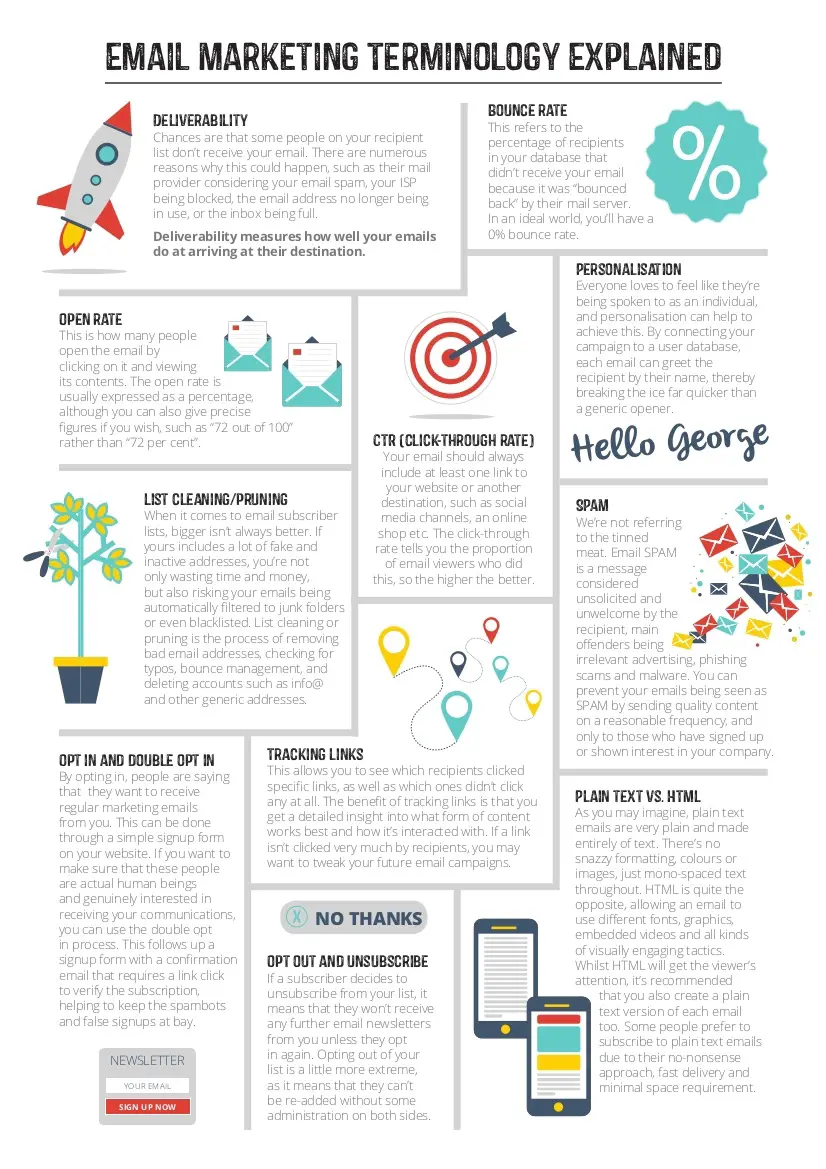
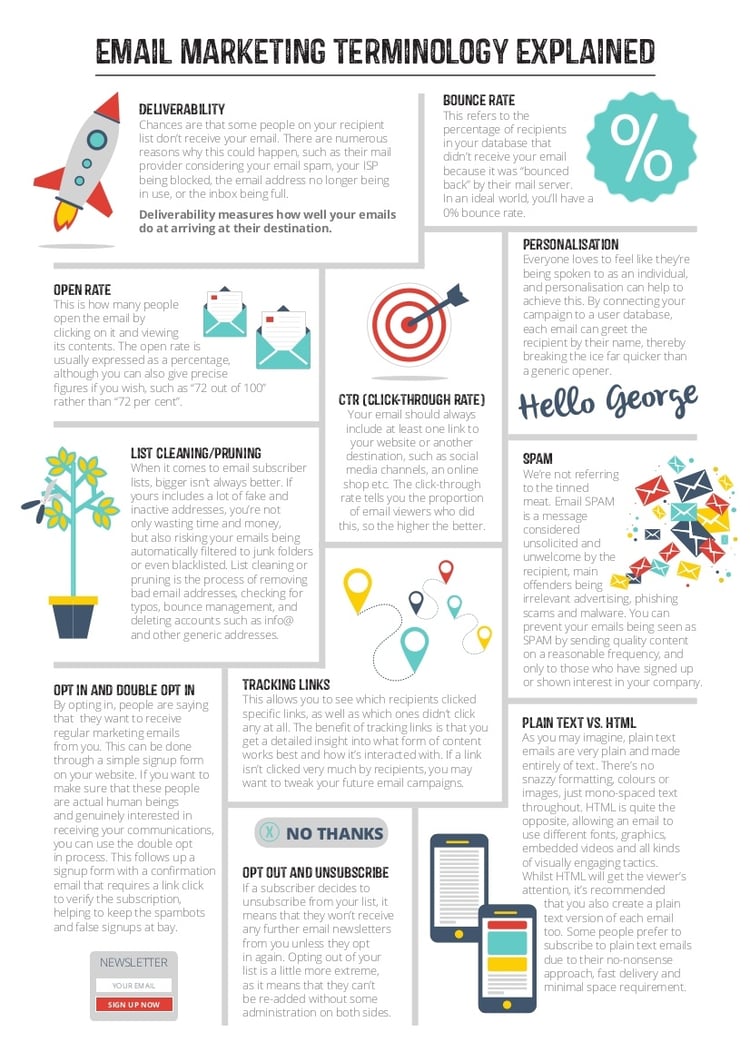
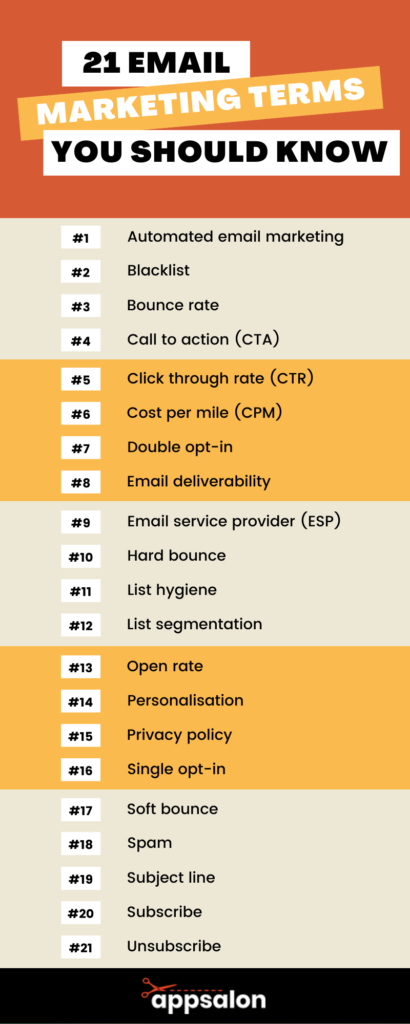
Email Marketing Terminology refers to the specific terms and phrases used in email marketing strategies. Understanding these terms helps in creating effective email campaigns.
Email marketing is a powerful tool for businesses to connect with their audience. Key terms like open rate, click-through rate, and conversion rate are essential. The open rate measures the percentage of emails opened by recipients. Click-through rate tracks the number of clicks on links within an email.
Conversion rate indicates the percentage of email recipients who take a desired action. Knowing these terms helps marketers optimize their email campaigns. Effective use of email marketing terminology ensures better engagement and higher ROI. Familiarizing yourself with these terms can significantly improve your email marketing strategies.
Introduction To Email Marketing Jargon
Email marketing can seem complex. Many terms can confuse beginners. Understanding key jargon is essential. It helps you navigate email marketing better. Let’s explore common email marketing terms.
Why Familiarity Matters
Knowing email marketing terms boosts your skills. It makes communication easier. You can talk with experts confidently. It also helps in understanding reports and analytics.
Navigating The Email Landscape
Here are some common terms:
Open Rate: The percentage of opened emails.
Click-Through Rate (CTR): The percentage of clicks on links.
Bounce Rate: The percentage of undelivered emails.
Conversion Rate: The percentage of desired actions taken.
Spam Score: A score indicating the likelihood of being marked as spam.
Term
Definition
Open Rate
The percentage of recipients who opened your email.
Click-Through Rate (CTR)
The percentage of recipients who clicked on a link.
Bounce Rate
The percentage of emails that were not delivered.
Conversion Rate
The percentage of recipients who took the desired action.
Spam Score
A score predicting if your email will be marked as spam.
Core Concepts In Email Campaigns
Email marketing is a powerful tool for businesses. Understanding its core concepts is crucial. This section will cover two key aspects: newsletters and transactional emails.
The Role Of Newsletters
Newsletters are regular updates sent to subscribers. They often include:
Company news
Product updates
Special offers
Industry insights
Newsletters help maintain engagement with your audience. They also build trust and loyalty. Consistency is key. Sending newsletters at regular intervals keeps your brand top-of-mind.
Transactional Emails Explained
Transactional emails are triggered by user actions. They include:
Order confirmations
Shipping notifications
Password resets
Account updates
These emails provide important information. They also enhance the customer experience. Personalized content in transactional emails increases relevance. This boosts user satisfaction and retention.
Email Type
Purpose
Frequency
Newsletters
Engage and inform subscribers
Weekly or Monthly
Transactional Emails
Provide essential information
As needed
Both types of emails play a crucial role. Understanding these concepts ensures effective email campaigns.
Understanding Subscriber Lists
Email marketing is a powerful tool. It helps businesses connect with audiences. To maximize its potential, understanding subscriber lists is crucial. Subscriber lists are groups of contacts who receive your emails. These lists are key to your email marketing strategy. They help you send targeted and relevant messages.
Segments And Groups
Segments and groups are two ways to organize subscriber lists. They help you tailor your messages. Segments are smaller parts of your main list. They are based on specific criteria. For example, you can create a segment for customers in a certain location. Or, you can segment by purchase history.
Groups are another way to categorize subscribers. Groups are based on interests or preferences. For example, you can create a group for subscribers interested in sports. Another group can be for those interested in tech.
Criteria
Segments
Groups
Location
Yes
No
Purchase History
Yes
No
Interests
No
Yes
The Importance Of Opt-in
Opt-in means subscribers agree to receive your emails. It is crucial for building trust. There are two main types of opt-in: single and double.
Single Opt-In: The subscriber signs up once. They start receiving emails immediately.
Double Opt-In: The subscriber signs up and confirms their email. They receive a confirmation email with a link. They must click the link to start receiving emails.
Double opt-in is more secure. It ensures the email address is valid. It also shows the subscriber is interested in your content.
Metrics That Matter
Email marketing success depends on key metrics. Understanding these metrics helps improve campaigns. Let’s explore crucial metrics.
Open Rates Demystified
Open rate shows the percentage of emails opened. It helps gauge the interest in your subject lines. A higher open rate means better engagement.
Open Rate (%)
Performance
20-25%
Average
25-30%
Good
30%+
Excellent
Tips to increase open rates:
Craft compelling subject lines.
Personalize your emails.
Send emails at optimal times.
Click-through Rates (ctr) Insights
CTR indicates the percentage of recipients clicking links. Higher CTR means effective content and calls-to-action.
CTR formula:
CTR = (Clicks / Emails Delivered) 100
Common CTR benchmarks:
1-5%: Average
5-10%: Good
10%+: Excellent
Strategies to boost CTR:
Use clear and strong calls-to-action.
Include engaging visuals and buttons.
Segment your email lists.
Decoding Email Deliverability
Email deliverability is crucial for any email marketing campaign. It determines if your emails reach the inbox. Understanding key terms helps improve this rate. Let’s dive into the important aspects of email deliverability.
Bounce Rates
Bounce rates tell you how many emails failed to deliver. There are two types of bounces: hard bounces and soft bounces.
Hard bounces: These occur when the email address is invalid.
Soft bounces: These happen when the recipient’s inbox is full.
High bounce rates can harm your sender reputation. Always clean your email list to avoid hard bounces. Soft bounces may resolve over time, but you should monitor them.
Spam Complaints
Spam complaints occur when recipients mark your email as spam. A high number of spam complaints can damage your deliverability.
To reduce spam complaints, follow these tips:
Send emails only to people who opted in.
Provide clear unsubscribe options in every email.
Use a recognizable sender name and email address.
Keeping your spam complaints low is vital. It helps maintain a good sender reputation and ensures better deliverability.
Automation And Trigger Emails
Email marketing can be powerful. Automation and trigger emails help save time. They also make emails more effective. This section breaks down the key terms. It helps you understand how to use automation and triggers.
Drip Campaigns Simplified
Drip campaigns send pre-written emails at set times. These emails follow a specific schedule. They help keep your audience engaged over time. Drip campaigns can nurture leads or guide customers. They are easy to set up.
Welcome Series: A set of emails for new subscribers.
Abandoned Cart: Emails sent to people who leave items in their cart.
Re-engagement: Emails for inactive subscribers to win them back.
Behavioral Triggers
Behavioral triggers send emails based on user actions. These emails feel personal and timely. They boost engagement and conversions.
Action
Trigger Email
Sign Up
Welcome Email
Purchase
Thank You Email
Click on Link
Follow-Up Email
Using these triggers, you can create personalized email experiences. This makes your audience feel valued. It also drives better results.
Design Elements In Emails
Creating compelling emails involves understanding key design elements. Good design improves readability and engagement. Let’s explore some important aspects.
Responsive Email Design
Responsive design ensures emails look good on all devices. Over half of emails are opened on mobile devices. This makes responsive design crucial.
Follow these tips for responsive design:
Use a single-column layout
Ensure text is large enough to read
Make buttons easy to tap
Keep images flexible and scalable
Your email content here
Call-to-action (cta) Effectiveness
A strong CTA boosts email conversions. It’s vital to design effective CTAs.
Here are some tips for effective CTAs:
Use clear and concise language
Make the button stand out with color
Place the CTA above the fold
Use action-oriented words
Effective CTAs lead to higher engagement and better results.
Legal Compliance And Best Practices
Email marketing is a powerful tool. It helps businesses connect with their audience. However, understanding legal compliance and best practices is crucial. Non-compliance can lead to hefty fines and damage to your brand’s reputation. This section will explore key regulations and best practices for email marketing.
Understanding Can-spam Act
The CAN-SPAM Act sets the rules for commercial emails. It establishes requirements for messages. It also gives recipients the right to stop receiving emails. Here are key points to follow:
Accurate “From” and “Reply-To” fields: Use real, accurate information.
Clear subject lines: Ensure they are not misleading.
Identify the message as an ad: Clearly state if it’s an advertisement.
Include your business address: A valid physical postal address is necessary.
Easy opt-out options: Provide a clear way to unsubscribe.
Honor opt-out requests promptly: Process requests within 10 business days.
GDPR and Email Marketing
The General Data Protection Regulation (GDPR) is a European law. It protects the personal data of EU citizens. If you email EU residents, follow these rules:
Rule
Description
Consent
Obtain clear, explicit consent before sending emails.
Data protection
Ensure the security and privacy of personal data.
Right to access
Allow users to access their data and how it’s used.
Right to be forgotten
Delete user data upon their request.
Transparency
Clearly state how and why data is collected.
Following these rules helps maintain trust with your audience. It also keeps your email marketing efforts compliant. Remember, legal compliance is not just about avoiding fines. It’s about respecting your audience’s privacy and building a trustworthy brand.
Advanced Email Techniques
Advanced email techniques can enhance your marketing efforts. These methods help you engage more users. Let’s dive into some effective techniques.
A/b Testing For Better Engagement
A/B testing compares two email versions. You test them to see which one works better. This method helps you understand what your audience likes.
Element
Version A
Version B
Subject Line
Get 50% Off Today!
Special Offer Just For You!
Call-to-Action
Shop Now
Buy Now
Personalization And Dynamic Content
Personalization makes emails feel special. Use the subscriber’s name. Offer them products based on their past purchases.
Dynamic content changes based on user data. It can show different images or offers to different users. This keeps the email relevant to each person.
Personalized Subject Lines: Increase open rates by 26%.
Dynamic Images: Show different images to different users.
Recommended Products: Based on user purchase history.
Here’s an example of a personalized email:
        Hi [Name],
        We thought you might like these products:
        - [Product 1]
        - [Product 2]
The Future Of Email Marketing
Email marketing is evolving rapidly. The future holds many exciting changes. Businesses must adapt to stay ahead. Let’s explore what’s coming next in email marketing.
Ai-driven Email Strategies
AI, or Artificial Intelligence, is transforming email marketing. AI can analyze huge amounts of data. This helps create personalized email content. AI can also automate email sending. This saves time and improves efficiency.
AI tools can segment your audience better. They can predict what kind of content each segment will enjoy. This leads to higher open and click-through rates.
AI also helps in A/B testing. It can quickly determine which version of an email performs better. This ensures your emails are always optimized.
Predictive Analytics In Email
Predictive analytics uses data to forecast future behavior. In email marketing, this means predicting what your audience wants. It can help you send the right message at the right time.
Predictive analytics can identify trends and patterns. This helps you understand what content will engage your audience. It can also suggest the best time to send emails.
Feature
Benefit
Customer Segmentation
Target specific groups with tailored content
Content Prediction
Send relevant content to each user
Optimal Send Times
Maximize email open rates
Using predictive analytics, you can create a more effective email strategy. This leads to better engagement and higher ROI.
Understand your audience’s needs
Send personalized content
Optimize email send times
Analyze data with AI tools
Segment your audience
Use predictive analytics to forecast trends
The future of email marketing is bright. Embrace these new technologies to stay ahead.
Frequently Asked Questions
What Are The Terminologies Of Email?
Email terminologies include Inbox, Outbox, CC, BCC, Subject Line, Signature, Attachment, Spam, Draft, and Forward.
What Are The 7 Email Marketing Strategies?
1. Segment your email list. 2. Personalize your content. 3. Optimize for mobile. 4. Use compelling subject lines. 5. Automate your emails. 6. Test and analyze performance. 7. Provide valuable content.
What Are The 5 Ts Of Email Marketing?
The 5 Ts of email marketing are Targeting, Timing, Testing, Tracking, and Trust. Focus on these elements to improve your campaigns.
What Are The 4 Ps Of Email Marketing?
The 4 Ps of email marketing are Personalization, Persuasion, Permission, and Performance. Personalize emails for relevance, persuade with compelling content, seek permission to build trust, and measure performance to optimize strategies.
Conclusion
Mastering email marketing terminology can boost your campaigns. Understanding these terms helps optimize strategy and improve engagement. Regularly update your knowledge to stay ahead. A well-informed approach can lead to better results. Keep learning and refining your skills for continued success in email marketing.
In today’s rapidly evolving business landscape, the success of an organization is not solely dependent on its strategies, products, or market conditions. The personal growth of its leaders and employees plays a pivotal role in driving innovation, productivity, and overall success. Investing in personal development can lead to a more resilient, motivated, and high-performing workforce. This article explores why personal growth is important for your business, outlining its benefits, key areas of focus, and practical steps to foster a culture of continuous improvement.
What is Personal Growth?
Personal growth refers to the ongoing process of self-improvement in various aspects of an individual’s life, including skills, knowledge, mindset, and emotional intelligence. In a business context, personal growth involves developing abilities and traits that enhance an individual’s performance, leadership, and ability to contribute to the organization’s goals.
Benefits of Personal Growth for Your Business
Enhanced Leadership: Leaders who commit to personal growth are better equipped to inspire and guide their teams, making informed decisions and fostering a positive work environment.
Increased Productivity: Employees who engage in personal development are often more motivated, focused, and efficient, leading to higher productivity levels.
Improved Innovation: Personal growth encourages creative thinking and problem-solving, driving innovation and helping businesses stay competitive.
Stronger Team Dynamics: As individuals develop better communication and interpersonal skills, team collaboration and cohesion improve, leading to more effective teamwork.
Higher Employee Retention: Organizations that invest in their employees’ personal growth are more likely to retain top talent, as individuals feel valued and see opportunities for career advancement.
Adaptability and Resilience: Personal growth fosters a growth mindset, enabling employees to adapt to changes and recover from setbacks more effectively.
Key Areas of Personal Growth
Leadership Skills: Developing skills such as decision-making, delegation, and conflict resolution can enhance an individual’s ability to lead effectively.
Emotional Intelligence: Improving self-awareness, empathy, and emotional regulation can lead to better relationships and a more harmonious workplace.
Communication Skills: Effective communication is crucial for collaboration, conflict resolution, and customer relations.
Time Management: Learning to prioritize tasks and manage time efficiently can significantly boost productivity and reduce stress.
Continuous Learning: Staying updated with industry trends and acquiring new skills can help employees remain competitive and innovative.
Physical and Mental Well-being: Fostering a healthy work-life balance and promoting wellness can improve overall performance and job satisfaction.
Practical Steps to Foster Personal Growth
Provide Learning Opportunities: Offer workshops, courses, and training programs that focus on both professional and personal development.
Encourage Goal Setting: Help employees set and pursue personal and professional goals, providing the necessary support and resources to achieve them.
Promote a Growth Mindset: Encourage a culture that values learning from mistakes, embracing challenges, and continuously seeking improvement.
Offer Mentorship Programs: Pair employees with mentors who can provide guidance, support, and insights based on their experience.
Create a Supportive Environment: Foster an environment where employees feel safe to express ideas, seek feedback, and take risks.
Recognize and Reward Growth: Acknowledge and celebrate the personal development achievements of employees to motivate ongoing growth.
FAQs
1. How does personal growth contribute to business success? Personal growth enhances skills, mindset, and emotional intelligence, leading to better leadership, increased productivity, and improved team dynamics, all of which contribute to business success.
2. Can small businesses benefit from investing in personal growth? Yes, small businesses can benefit significantly from investing in personal growth, as it can lead to a more motivated and capable workforce, driving innovation and competitiveness.
3. What are some effective personal growth activities? Effective personal growth activities include leadership training, communication workshops, time management courses, wellness programs, and continuous learning opportunities.
4. How can personal growth improve employee retention? Employees who see opportunities for personal and professional development are more likely to feel valued and satisfied, reducing turnover and increasing retention.
5. What role do leaders play in fostering personal growth? Leaders play a crucial role by setting an example, encouraging a growth mindset, providing resources and opportunities for development, and recognizing and rewarding personal growth.
6. How can a business measure the impact of personal growth initiatives? The impact can be measured through improved performance metrics, employee satisfaction surveys, retention rates, and feedback from personal growth programs.
7. Why is emotional intelligence important for personal growth? Emotional intelligence is important as it enhances self-awareness, empathy, and interpersonal skills, leading to better relationships and a more positive work environment.
8. What challenges might a business face when promoting personal growth? Challenges can include resistance to change, lack of resources, insufficient support from leadership, and difficulties in measuring the impact of personal growth initiatives.
Conclusion
Personal growth is a crucial element that can significantly impact the success of your business. By investing in the development of your leaders and employees, you can foster a more innovative, productive, and resilient organization. Personal growth not only enhances individual performance but also contributes to a positive and dynamic workplace culture. Embrace personal growth as a strategic priority to unlock the full potential of your workforce and drive your business towards long-term success.
In the competitive world of business, finding ways to increase revenue without acquiring new customers is a valuable strategy. Upselling, the practice of encouraging customers to purchase a higher-end product or an additional service, is a powerful tool to achieve this goal. This article delves into why upselling is important, highlighting its benefits, techniques, and best practices. By understanding and implementing effective upselling strategies, businesses can enhance their profitability while also improving customer satisfaction.
Why Upselling Is Important
What is Upselling?
Upselling involves offering customers a higher-end version of a product they are considering or an additional service that complements their purchase. This strategy aims to enhance the customer’s experience by providing more value while simultaneously increasing the business’s revenue. Effective upselling requires a deep understanding of the customer’s needs and preferences to present relevant and beneficial upgrades or add-ons.
Benefits of Upselling
Increased Revenue: Upselling can significantly boost sales by increasing the average transaction value, leading to higher overall revenue without the need for additional customer acquisition costs.
Improved Customer Experience: By offering products or services that better meet the customer’s needs or enhance their experience, businesses can increase customer satisfaction and loyalty.
Better Customer Retention: Customers who perceive they are receiving more value from their purchases are more likely to return, reducing churn and increasing lifetime value.
Efficient Use of Resources: It is often more cost-effective to upsell to existing customers than to attract new ones, making better use of marketing and sales resources.
Enhanced Product Awareness: Upselling introduces customers to the full range of a company’s offerings, increasing awareness and interest in premium products or services.
Key Upselling Techniques
Understand Customer Needs: Tailor upselling offers based on a thorough understanding of the customer’s preferences, needs, and purchase history.
Highlight Benefits: Clearly communicate the benefits and added value of the higher-end product or additional service, focusing on how it meets the customer’s needs better than the original option.
Create Bundles: Offer product or service bundles that provide better value together than separately, making the upsell more attractive.
Provide Social Proof: Use testimonials, reviews, and case studies to demonstrate the advantages and popularity of the upsell option.
Leverage Timing: Introduce upsell offers at the right moment in the customer journey, such as during the checkout process or after a positive interaction with the brand.
Offer Trials or Demos: Allow customers to experience the benefits of the higher-end product or service through free trials or demonstrations.
Best Practices for Effective Upselling
Personalize the Offer: Use customer data to personalize upsell recommendations, making them more relevant and appealing.
Keep It Simple: Avoid overwhelming customers with too many options. Present a clear and concise upsell offer.
Train Your Team: Ensure that your sales and customer service teams are well-trained in upselling techniques and understand the importance of providing value to the customer.
Focus on Long-Term Relationships: Aim to build long-term relationships rather than maximizing immediate sales. Offer genuine value to foster trust and loyalty.
Monitor and Optimize: Continuously track the performance of your upselling strategies and make adjustments based on customer feedback and sales data.
FAQs
1. What is the difference between upselling and cross-selling? Upselling involves encouraging customers to purchase a higher-end product or service, while cross-selling involves offering complementary products or services.
2. How can upselling improve customer satisfaction? Upselling can improve customer satisfaction by offering products or services that better meet their needs or enhance their experience, providing greater value.
3. Is upselling suitable for all types of businesses? Yes, upselling can be adapted to various industries, from retail and hospitality to software and professional services, as long as it is done thoughtfully and with the customer’s best interests in mind.
4. What are some common upselling mistakes to avoid? Common mistakes include being too aggressive, not personalizing the offer, and failing to clearly communicate the benefits of the upsell.
5. How can technology assist with upselling? Technology, such as CRM systems and AI-driven recommendation engines, can help personalize upsell offers and identify the best moments to present them to customers.
6. How do you measure the success of upselling strategies? Success can be measured through metrics such as increased average transaction value, customer satisfaction scores, and repeat purchase rates.
7. Can upselling backfire? Yes, if done insensitively or aggressively, upselling can backfire by annoying customers or making them feel pressured, potentially leading to lost sales and damaged relationships.
Conclusion
Upselling is a crucial strategy for businesses aiming to increase revenue and enhance customer satisfaction. By effectively understanding and implementing upselling techniques, companies can boost their average transaction value, improve customer experiences, and build stronger relationships with their clients. Embracing upselling as a core component of your sales strategy can lead to sustainable growth and long-term success.
In the realm of business, success is often built on a foundation of strong relationships. Relationship management is the strategic approach to nurturing and maintaining these connections, whether with customers, partners, or employees. Effective relationship management can lead to increased loyalty, better collaboration, and enhanced overall performance. This article explores the concept of relationship management in business, its importance, key components, and best practices for building and sustaining strong relationships.
What is Relationship Management?
Relationship management in business refers to the strategies and practices used to maintain and enhance interactions with key stakeholders, including customers, business partners, and employees. It involves understanding their needs, expectations, and behaviors to build trust and foster long-term loyalty.
Key Components of Relationship Management
Customer Relationship Management (CRM): Utilizing CRM systems to track customer interactions, manage data, and automate sales and marketing processes. This helps in delivering personalized experiences and improving customer satisfaction.
Partner Relationship Management (PRM): Developing and managing relationships with business partners to ensure mutual growth and collaboration. This includes regular communication, joint ventures, and shared resources.
Employee Relationship Management (ERM): Focusing on the internal relationships within an organization to create a positive work environment, boost morale, and enhance employee retention and productivity.
Importance of Relationship Management
Enhanced Customer Satisfaction: By understanding and meeting customer needs effectively, businesses can improve satisfaction and foster loyalty.
Increased Retention Rates: Strong relationships with customers and partners lead to higher retention rates, reducing churn and increasing lifetime value.
Better Communication: Effective relationship management ensures clear, consistent, and meaningful communication with all stakeholders.
Improved Efficiency: Streamlined processes and effective use of CRM systems enhance overall business efficiency and productivity.
Data-Driven Decisions: Access to comprehensive data on customer interactions and preferences enables more informed and strategic decision-making.
Best Practices for Relationship Management
Personalization: Tailor interactions based on individual customer needs and preferences to create a more personalized experience.
Consistent Communication: Maintain regular and meaningful communication with customers, partners, and employees to build trust and engagement.
Collect and Act on Feedback: Implement systems to gather feedback from stakeholders and use it to improve products, services, and processes.
Invest in Training: Ensure staff are equipped with the skills and knowledge needed for effective relationship management through ongoing training and development programs.
Leverage Technology: Utilize CRM and other relationship management tools to streamline processes, enhance data management, and improve overall efficiency.
FAQs
1. What is the role of CRM in relationship management? CRM systems play a pivotal role in relationship management by helping businesses track customer interactions, manage data, and automate sales and marketing processes, leading to improved customer satisfaction and loyalty.
2. How can businesses improve partner relationships? Businesses can improve partner relationships by maintaining regular communication, engaging in joint ventures, sharing resources, and ensuring mutual growth and collaboration.
3. Why is employee relationship management important? Employee relationship management is important because it fosters a positive work environment, boosts morale, enhances productivity, and improves employee retention.
4. What are some effective CRM tools for small businesses? Effective CRM tools for small businesses include HubSpot CRM, Zoho CRM, and Salesforce Essentials, each offering a range of features tailored to small business needs.
5. How can feedback be effectively used in relationship management? Feedback can be effectively used by gathering it systematically through surveys, reviews, and direct interactions, then analyzing it to make informed improvements to products, services, and processes, ultimately enhancing stakeholder satisfaction.
Conclusion
Relationship management is a crucial aspect of business success, encompassing strategies and practices that help build and sustain strong connections with customers, partners, and employees. By focusing on personalized interactions, consistent communication, and effective use of technology, businesses can enhance satisfaction, retention, and overall performance. Embracing relationship management as a core component of your business strategy can lead to long-term growth and success.
In the fast-paced and competitive world of business, success hinges not just on innovative ideas but also on effective leadership, strategic thinking, and continuous improvement. Business coaching has emerged as a vital tool for entrepreneurs, executives, and teams aiming to enhance their performance, overcome challenges, and achieve their goals. This article explores why business coaching is important, highlighting its benefits, key aspects, and the transformative impact it can have on businesses of all sizes.
Why Business Coaching Is Important
What is Business Coaching?
Business coaching is a collaborative relationship between a coach and a business professional, focused on helping the latter achieve personal and professional growth. Coaches provide guidance, support, and expertise to help individuals and organizations enhance their performance, develop skills, and achieve specific objectives. This can include improving leadership capabilities, refining business strategies, increasing productivity, and fostering innovation.
Benefits of Business Coaching
Enhanced Leadership Skills: Business coaching helps leaders develop essential skills such as decision-making, communication, and emotional intelligence, which are crucial for effective leadership.
Improved Performance: Coaches work with individuals and teams to identify performance gaps, set realistic goals, and create actionable plans to achieve them.
Strategic Thinking: Coaching encourages a strategic mindset, helping businesses to plan for the future, identify opportunities, and navigate challenges with confidence.
Accountability and Motivation: Coaches hold clients accountable for their actions and decisions, providing the motivation and support needed to stay focused and committed to their goals.
Enhanced Innovation: By fostering a culture of continuous improvement and creative thinking, business coaching can drive innovation and competitive advantage.
Better Work-Life Balance: Coaches help clients manage their time and priorities effectively, leading to a healthier work-life balance and reduced stress.
Key Aspects of Business Coaching
Goal Setting: Coaches help clients define clear, achievable goals that align with their personal and professional aspirations.
Personalized Guidance: Coaching is tailored to the individual’s or team’s specific needs, providing customized strategies and solutions.
Skill Development: Coaches focus on developing the skills and competencies needed for success, such as leadership, communication, and problem-solving.
Feedback and Reflection: Regular feedback and reflection sessions help clients understand their progress, identify areas for improvement, and adjust their strategies accordingly.
Support and Encouragement: Coaches provide ongoing support and encouragement, helping clients overcome obstacles and stay motivated.
Impact of Business Coaching
Increased Productivity: By identifying and addressing inefficiencies, business coaching can significantly boost productivity and performance.
Higher Employee Engagement: Coaching fosters a positive work environment, leading to higher levels of employee engagement, satisfaction, and retention.
Improved Financial Performance: Businesses that invest in coaching often see improved financial outcomes due to better decision-making, strategic planning, and operational efficiency.
Stronger Organizational Culture: Coaching promotes a culture of continuous learning and improvement, which can enhance overall organizational health and resilience.
Personal Growth: Beyond professional benefits, business coaching supports personal growth, helping individuals achieve a greater sense of fulfillment and purpose in their careers.
FAQs
1. What is the role of a business coach? A business coach provides guidance, support, and expertise to help individuals and organizations improve performance, develop skills, and achieve their goals.
2. Who can benefit from business coaching? Entrepreneurs, executives, managers, and teams at all levels can benefit from business coaching, regardless of the size or type of business.
3. How does business coaching improve leadership skills? Coaches help leaders develop essential skills such as decision-making, communication, and emotional intelligence through personalized guidance and feedback.
4. Is business coaching suitable for small businesses? Yes, small businesses can greatly benefit from coaching by gaining strategic insights, improving productivity, and enhancing their competitive edge.
5. What should I look for in a business coach? Look for a coach with relevant experience, a proven track record, strong communication skills, and the ability to provide personalized and actionable guidance.
6. How long does business coaching typically last? The duration of coaching can vary based on individual needs and goals, ranging from a few months to several years. Regular sessions, typically weekly or bi-weekly, are common.
7. Can business coaching help with work-life balance? Yes, business coaching can help individuals manage their time and priorities more effectively, leading to a healthier work-life balance and reduced stress.
8. How do I measure the success of business coaching? Success can be measured through improved performance metrics, achievement of set goals, enhanced skills, and overall satisfaction with the coaching process. Regular feedback and reflection help track progress.
Conclusion
Business coaching is a powerful tool that can drive significant improvements in performance, leadership, and overall business success. By providing personalized guidance, fostering strategic thinking, and enhancing key skills, business coaches help individuals and organizations unlock their full potential. Whether you’re an entrepreneur looking to grow your business, an executive aiming to enhance your leadership capabilities, or a team seeking better collaboration and productivity, investing in business coaching can be a game-changer. Embrace business coaching as a strategic asset to navigate challenges, seize opportunities, and achieve your long-term goals.
Introduction: The Significance of Online Reputation
In the digital age, a company’s reputation is a critical asset that can make or break its success. With the vast majority of consumers relying on online reviews, social media, and search engine results to form opinions about businesses, managing and maintaining a positive online reputation has never been more important. Online Reputation Management (ORM) is the practice of monitoring, influencing, and controlling your brand’s reputation on the Internet. This article delves into the key components of ORM and provides actionable strategies to safeguard and enhance your brand’s image online.
Understanding Online Reputation Management
What is Online Reputation Management?
Online Reputation Management (ORM) involves a series of strategies and practices aimed at shaping the public perception of a business or individual on the internet. ORM encompasses various activities, including:
Monitoring: Keeping track of what is being said about your brand across online platforms.
Responding: Engaging with customer feedback, addressing negative reviews, and acknowledging positive comments.
Influencing: Promoting positive content and reviews to enhance your brand’s image.
Suppressing: Minimizing the visibility of negative content through SEO and other techniques.
Why is ORM Important?
ORM is essential for several reasons:
Consumer Trust: Positive online reputation builds trust and credibility with potential customers.
Competitive Advantage: A strong online reputation differentiates your brand from competitors.
Crisis Management: Effective ORM helps manage and mitigate the impact of negative publicity or reviews.
Search Engine Visibility: ORM efforts can improve your search engine rankings, making it easier for customers to find positive information about your brand.
Customer Acquisition and Retention: Positive reviews and a good online reputation attract new customers and retain existing ones.
Key Components of Online Reputation Management
1. Monitoring and Listening
The first step in ORM is to monitor what is being said about your brand online. This involves tracking reviews, social media mentions, blog posts, and news articles. Various tools can help automate this process and provide real-time alerts.
Review Monitoring: Keep an eye on reviews posted on platforms like Google, Yelp, and industry-specific sites.
Social Listening: Use tools like Hootsuite, Sprout Social, or Brandwatch to monitor social media mentions and hashtags related to your brand.
Search Engine Alerts: Set up Google Alerts for your brand name, products, and key personnel to stay informed about new content.
2. Managing Reviews and Feedback
Responding to reviews and feedback is crucial in maintaining a positive online reputation. Whether the feedback is positive or negative, timely and thoughtful responses show that you value your customers and are committed to their satisfaction.
Positive Reviews: Thank customers for their positive feedback and encourage them to share their experiences.
Negative Reviews: Address negative reviews professionally and constructively. Apologize if necessary, provide a solution, and offer to continue the conversation offline if needed.
Soliciting Reviews: Encourage satisfied customers to leave reviews. Use email follow-ups, in-store requests, or incentives to gather more positive reviews.
3. Creating and Promoting Positive Content
Creating and promoting positive content helps shape the narrative around your brand. This content can take various forms, including blog posts, press releases, social media updates, and customer testimonials.
Content Marketing: Develop high-quality content that highlights your brand’s strengths, values, and success stories.
SEO Optimization: Optimize your content for search engines to ensure that positive information ranks highly in search results.
Social Media Engagement: Actively engage with your audience on social media by sharing positive news, responding to comments, and showcasing customer success stories.
4. Addressing and Mitigating Negative Content
Negative content, whether it’s a bad review, a critical blog post, or unfavorable news, can harm your online reputation. It’s crucial to address and mitigate the impact of such content proactively.
Responding to Negative Content: Engage with negative content constructively. Apologize if necessary, provide context, and offer solutions.
SEO and Content Suppression: Use SEO techniques to promote positive content and push down negative results in search engine rankings.
Legal Recourse: In cases of defamatory content or false information, consider legal action to have the content removed.
5. Leveraging Customer Advocacy
Happy and loyal customers can be powerful advocates for your brand. Encouraging and amplifying customer advocacy can significantly boost your online reputation.
Customer Testimonials: Highlight positive testimonials and success stories on your website and social media.
Influencer Partnerships: Collaborate with influencers who can positively promote your brand to their followers.
Referral Programs: Implement referral programs that reward customers for bringing in new business and sharing positive experiences.
Strategies for Effective Online Reputation Management
1. Develop a Comprehensive ORM Plan
Creating a comprehensive ORM plan involves setting clear goals, defining roles and responsibilities, and outlining specific strategies and tactics to manage your online reputation.
Set Objectives: Define what you want to achieve with your ORM efforts, such as improving customer reviews or increasing positive online visibility.
Assign Responsibilities: Determine who will be responsible for monitoring, responding, and creating content within your organization.
Outline Strategies: Detail the specific actions you will take to monitor, manage, and improve your online reputation.
2. Implement a Crisis Management Protocol
Having a crisis management protocol in place is essential for quickly and effectively addressing negative situations that could harm your online reputation.
Crisis Team: Assemble a team responsible for managing crises, including representatives from PR, customer service, and senior management.
Response Plan: Develop a response plan that outlines steps to take in the event of a crisis, including how to communicate with stakeholders and the public.
Communication Channels: Identify the communication channels you will use to address and resolve crises, such as social media, press releases, and direct customer outreach.
3. Invest in ORM Tools and Technologies
Utilize ORM tools and technologies to streamline the monitoring and management of your online reputation. These tools can automate tasks, provide insights, and help you stay ahead of potential issues.
Review Management Tools: Tools like Birdeye, ReviewTrackers, or Trustpilot can help manage and respond to customer reviews across multiple platforms.
Social Media Monitoring: Use social media monitoring tools like Mention, Sprout Social, or Hootsuite to track mentions and conversations about your brand.
SEO and Content Management: Invest in SEO tools like SEMrush or Moz to optimize your content and manage your search engine presence.
4. Engage with Your Audience Authentically
Authentic engagement with your audience is key to building trust and a positive online reputation. Respond to comments, participate in conversations, and show genuine interest in your customers’ experiences.
Personalized Responses: Address customers by name and provide personalized responses that reflect your understanding of their concerns.
Proactive Engagement: Don’t wait for feedback; actively engage with your audience through social media, surveys, and direct communication.
Transparency and Honesty: Be transparent about your business practices and honest in your communications. Admit mistakes and take responsibility when things go wrong.
5. Regularly Review and Update Your ORM Strategies
The digital landscape is constantly evolving, and so should your ORM strategies. Regularly review and update your approaches to ensure they remain effective and aligned with your goals.
Performance Metrics: Track key performance metrics to evaluate the success of your ORM efforts, such as review ratings, social media sentiment, and search engine rankings.
Feedback Loop: Establish a feedback loop to gather input from customers, employees, and stakeholders on your ORM practices.
Continuous Improvement: Use the insights gained from your reviews to continuously improve your ORM strategies and adapt to changing circumstances.
Conclusion: The Ongoing Journey of Online Reputation Management
Online Reputation Management is an ongoing journey that requires consistent effort, vigilance, and adaptability. In today’s digital era, where information spreads rapidly and customer opinions can significantly impact your business, maintaining a positive online reputation is paramount. By developing a comprehensive ORM plan, leveraging the right tools and technologies, and engaging authentically with your audience, you can safeguard and enhance your brand’s image.
Investing in ORM not only protects your business from potential reputational risks but also positions you as a trustworthy and credible brand in the eyes of your customers. Embrace the power of ORM to build a resilient and positive online presence that drives customer trust, loyalty, and long-term success.
FAQs on Online Reputation Management
1. What is Online Reputation Management (ORM)?
Online Reputation Management (ORM) involves monitoring, influencing, and controlling the perception of your brand on the internet. It includes activities such as managing reviews, responding to customer feedback, promoting positive content, and mitigating negative content.
2. Why is ORM important for businesses?
ORM is crucial because it helps build consumer trust, provides a competitive advantage, manages crises, improves search engine visibility, and supports customer acquisition and retention. A positive online reputation is essential for attracting and retaining customers.
3. How can I monitor my brand’s online reputation?
You can monitor your brand’s online reputation using tools like Google Alerts, social media monitoring platforms (Hootsuite, Sprout Social), and review management systems (Birdeye, ReviewTrackers). These tools provide real-time alerts and insights on what is being said about your brand.
4. What should I do if my business receives a negative review?
When your business receives a negative review, respond promptly and professionally. Apologize for any issues, provide a solution or offer to resolve the matter offline. Addressing negative reviews constructively shows that you value customer feedback and are committed to improving.
5. How can I promote positive content about my brand?
Promote positive content by creating high-quality blog posts, press releases, and social media updates. Encourage satisfied customers to leave reviews and testimonials. Use SEO strategies to ensure positive content ranks highly in search engine results.
6. What is the role of SEO in ORM?
SEO plays a critical role in ORM by helping control the visibility of content in search engine results. By optimizing positive content and using SEO techniques, you can ensure that favorable information about your brand appears prominently, while negative content is pushed down.
7. How can I encourage customer advocacy?
Encourage customer advocacy by highlighting positive testimonials, collaborating with influencers, and implementing referral programs. Engaging happy customers and rewarding them for sharing their positive experiences can significantly boost your online reputation.
8. What tools can help with ORM?
Several tools can assist with ORM, including review management systems (Birdeye, Trustpilot), social media monitoring platforms (Mention, Brandwatch), and SEO tools (SEMrush, Moz). These tools help automate monitoring, manage reviews, and optimize content.
9. How can I handle a reputation crisis?
To handle a reputation crisis, assemble a crisis management team, develop a response plan, and communicate transparently with stakeholders. Use multiple channels to address the issue, provide solutions, and take responsibility. Monitoring and adapting your strategies are essential.
10. How often should I review and update my ORM strategies?
Regularly review and update your ORM strategies to stay effective and aligned with your goals. Track performance metrics, gather feedback, and adapt to changes in the digital landscape. Continuous improvement ensures your ORM efforts remain relevant and successful.
For further assistance on managing your online reputation, feel free to reach out!
Email marketing is important because it offers direct communication with customers and delivers high ROI. It builds relationships and drives conversions.
Email marketing remains a cornerstone of digital marketing strategies. It allows businesses to reach targeted audiences directly in their inboxes. Personalized and relevant content can engage customers effectively. Email campaigns are cost-effective and measurable, offering insights into customer behavior. With high open and click-through rates, emails can significantly boost sales and brand loyalty.
Automated emails ensure timely communication, enhancing customer experience. Businesses can segment their audiences to deliver tailored messages, increasing relevance and engagement. Email marketing also supports other marketing channels, integrating seamlessly for cohesive campaigns. This direct form of communication is crucial for maintaining customer relationships and driving business growth.
The Power Of Email Marketing
Email marketing is a strong tool in the digital age. It helps businesses connect with their audience. Through email, you can share news, offers, and updates. This method remains effective for many reasons.
High Roi In Digital Marketing
Email marketing offers high returns on investment (ROI). Studies show that for every $1 spent, you can expect an average return of $42. This makes email marketing one of the best ways to grow your business.
Marketing Channel
Average ROI
Email Marketing
$42 per $1
Social Media
$10 per $1
PPC Advertising
$2 per $1
Personalization And Segmentation
Personalization makes emails more relevant to each subscriber. Use names and past behaviors to tailor messages. This increases open and click-through rates.
Segmentation helps target specific groups within your audience. Divide your email list based on interests, location, or purchase history. Send tailored content to each segment for better engagement.
Personalized subject lines increase open rates by 26%.
Segmented campaigns have a 760% increase in revenue.
Use personalization and segmentation to make emails effective. This builds stronger relationships with your audience.
Building Relationships Through Email
Email marketing is a powerful tool for building relationships. It allows businesses to connect with their audience personally and directly. This connection is vital for growth and success.
Cultivating Customer Loyalty
Creating loyal customers is key to business success. Email marketing helps in nurturing this loyalty. Here’s how:
Personalized Content: Send content tailored to individual preferences. This makes your emails more relevant.
Regular Updates: Keep customers informed about new products and services. They feel valued and informed.
Exclusive Offers: Reward loyal customers with special deals. This encourages repeat business.
These strategies help in building a strong, loyal customer base.
Engaging Prospects Consistently
Consistent engagement is crucial for turning prospects into customers. Email marketing allows you to stay in touch regularly. Here’s how you can do it:
Welcome Emails: Send a friendly welcome message to new subscribers. It sets the tone for future communications.
Educational Content: Provide valuable information about your industry. This builds trust and authority.
Follow-up Emails: Reach out to prospects who showed interest. Remind them of your offerings.
These approaches ensure that your prospects stay engaged and interested in your brand.
Cost-effective Marketing Strategy
Email marketing is a cost-effective strategy for businesses of all sizes. It allows you to reach your audience without spending a lot of money. This makes it ideal for both small businesses and large enterprises. Let’s explore why email marketing is a smart choice for your budget.
Low Budget, High Impact
With email marketing, you don’t need a big budget. You can start with a small amount and still see great results. Here’s why:
No printing costs
No postage fees
No expensive ad space
Emails can be sent to thousands of people at once. This means you get more reach for less money. Even a simple email campaign can generate a high return on investment (ROI).
Scalability For Any Business Size
Email marketing scales easily. Whether you have 100 customers or 10,000, you can manage your campaigns effectively. Here’s how:
Business Size
Email Marketing Benefit
Small Business
Affordable plans, easy to manage
Medium Business
Automation tools, segmented lists
Large Enterprise
Advanced analytics, personalized content
Automation tools help you send emails at the right time. Segmented lists ensure the right message goes to the right person. Advanced analytics let you track performance and improve your strategy.
Email marketing grows with your business. Start small and expand as you need. It’s a flexible and cost-effective way to reach your audience.
Measurable Results And Analytics
Email marketing stands out because it provides measurable results and analytics. This means you can track how well your emails perform. You can see what works and what doesn’t. This helps you make better decisions for future campaigns. Let’s dive into how tracking opens and clicks, as well as understanding audience behavior, can benefit your email marketing strategy.
Tracking Opens And Clicks
Tracking opens and clicks is essential. It helps you see who opens your emails. This shows which subject lines are effective. You can also track clicks on links in your email. This tells you which content interests your audience.
Open Rates: Shows how many people opened your email.
Click-Through Rates (CTR): Shows how many people clicked on links.
These metrics help you understand your audience’s interests. You can improve your future emails based on this data.
Understanding Audience Behavior
Understanding audience behavior is key to successful email marketing. Analytics provide insights into what your audience likes. You can see which topics get the most engagement. You can also see the best times to send emails.
Consider using segmentation. This involves dividing your audience into smaller groups. Send targeted emails to each segment. This increases the chance of engagement.
Metric
What it Tells You
Open Rate
Interest in your subject line
CTR
Interest in your email content
Unsubscribe Rate
Discontent with your emails
These metrics are vital. They help you refine your strategy. They ensure your emails resonate with your audience.
Increased Website Traffic
Email marketing is crucial for boosting website traffic. By sending targeted emails, you can guide readers to your site. This increases the chances of conversions and sales. Let’s explore how email marketing can achieve this.
Directing Readers To Your Site
Email marketing helps direct readers to your site. Each email sent is an opportunity to bring visitors to your website. Include links to your latest blog posts, product pages, or special offers. Readers click these links and visit your site.
By consistently sharing valuable content, you build trust. Readers are more likely to visit your site regularly. This consistency keeps your website traffic steady and growing.
Leveraging Calls-to-action
Calls-to-action (CTAs) are vital in emails. A CTA encourages readers to take a specific action. Use clear and compelling CTAs to drive traffic to your site. Examples of effective CTAs include:
Read More: Link to a full article on your site.
Shop Now: Direct readers to your product pages.
Learn More: Provide additional information on your website.
CTAs should stand out in your email. Use bold text, buttons, or colors to grab attention. A well-placed CTA increases the likelihood of readers clicking through to your site. This boosts your website traffic and potential for conversions.
Boosting Sales With Targeted Campaigns
Email marketing is key for boosting sales. Targeted campaigns can reach specific customers. This leads to higher sales and better engagement. By focusing on customer needs, you can create personalized offers. This makes customers feel valued and increases their likelihood to buy.
Product Recommendations
Personalized product recommendations can drive sales. Use customer data to suggest relevant items. This shows customers you understand their needs. For example, if a customer bought shoes, suggest matching socks. This encourages more purchases.
Customer Purchase
Recommended Products
Smartphone
Phone Case, Screen Protector
Jacket
Scarf, Hat
Laptop
Laptop Bag, Mouse
Time-sensitive Offers
Time-sensitive offers create urgency. Limited-time discounts make customers act quickly. Use these offers to clear stock or promote new items. Send emails with countdown timers. This adds excitement and urgency.
Create a sense of urgency. Use phrases like “Hurry, offer ends soon!” or “Limited stock available!”. This encourages immediate action.
Mobile Reach And Accessibility
Email marketing is more powerful than ever in today’s mobile age. People use smartphones for almost everything, including checking emails. This makes email marketing crucial for reaching a broader audience.
The Rise Of Mobile Email Access
Many people read emails on their mobile devices. Studies show that over 60% of emails are opened on smartphones. This trend is growing each year.
Mobile email access allows marketers to reach people anytime, anywhere. Users can read emails while commuting, waiting in lines, or during breaks. This convenience increases the chances of your emails being read.
Designing For Mobile Users
Emails must be optimized for mobile devices. A well-designed mobile email is easy to read and navigate. Here are some tips for designing mobile-friendly emails:
Use a simple, single-column layout.
Keep the subject line short and catchy.
Use large, readable fonts.
Ensure buttons are big enough to tap easily.
Use images wisely; they should load quickly.
Below is a table showing the key elements of a good mobile email design:
Element
Importance
Best Practice
Layout
High
Single-column for easy scrolling
Subject Line
High
Short and engaging
Font Size
Medium
At least 14px
Buttons
High
Large and tappable
Images
Medium
Optimized for quick loading
Mobile-friendly emails engage users better. They improve click-through rates and conversions. It’s essential to consider mobile users in your email marketing strategy.
Staying Top Of Mind
Staying top of mind is crucial for any business. Email marketing helps you achieve this goal. By regularly appearing in your subscribers’ inbox, you ensure your brand remains fresh in their memory. This consistent engagement builds a stronger relationship with your audience. Let’s dive deeper into the importance of staying top of mind through email marketing.
Regular Updates And Newsletters
Sending regular updates keeps your audience informed. Share news about your products, services, or company events. Newsletters are a great tool for this purpose. They can cover various topics like:
New product launches
Company news and achievements
Special offers and discounts
Regular communication through email builds trust with your audience. It shows you are active and engaged. Your subscribers look forward to your updates. This anticipation strengthens your relationship with them.
Positioning As An Industry Expert
Email marketing helps position your brand as an industry expert. Share valuable content in your emails. This can include:
Tips and tricks related to your industry
Case studies and success stories
Educational articles and guides
By offering useful information, you establish your authority. Your audience begins to see you as a reliable source. This trust can lead to higher engagement and conversions. Email marketing also allows for personalization. Tailor your content to meet the specific needs of your audience. This targeted approach enhances your credibility.
Here’s a simple table showcasing the benefits:
Benefit
Impact
Regular Updates
Keeps audience informed and engaged
Newsletters
Builds anticipation and trust
Expert Positioning
Establishes authority and reliability
Email marketing is a powerful tool. It keeps your brand top of mind. It also positions you as an industry expert. These benefits lead to stronger relationships with your audience.
Frequently Asked Questions
What Is Email Marketing And Why Is It Beneficial?
Email marketing is a digital strategy to send emails to a targeted audience. It boosts engagement, sales, and customer loyalty.
Why Is E-mail Marketing Still Useful?
E-mail marketing remains effective due to its direct reach, cost-efficiency, personalization, and high ROI. It builds customer relationships and drives conversions.
Why Email Marketing Is More Important Than Ever?
Email marketing remains crucial due to its high ROI, direct customer engagement, and personalized communication. It fosters brand loyalty, drives conversions, and provides measurable results.
How Powerful Is Email Marketing?
Email marketing is highly effective, offering high ROI. It reaches a broad audience, boosts engagement, and drives conversions.
Conclusion
Email marketing remains a powerful tool for businesses. It boosts engagement, nurtures leads, and drives conversions. Implementing email strategies can enhance customer relationships and increase sales. Don’t overlook the potential of email marketing. Start leveraging it today to see significant growth in your business.